The Oldest Way to Kill a Republic
A leader who already holds power, turning the state against the one thing that can take it from him: it is among the oldest moves in politics, and the record shows exactly how it is done, why it keeps working, and how it is undone. Lay the recurring preconditions against America now and the fit is uncomfortably close.
In 27 BCE, a man who had spent a decade bending Rome to his will walked into the Senate and offered to give it back. The civil wars were over, Octavian said; the extraordinary powers he had gathered would return to the Senate and the people. The senators—some of whom owed him their lives, the rest of whom feared him—begged him to keep them. With a show of reluctance, he agreed.
Then he kept everything else, too. He kept the Senate, the consuls elected each year as they had been for five centuries, the assemblies and courts and priesthoods, the whole magnificent apparatus of the republic. And behind it—every form intact, every function drained—the man now called Augustus ruled alone for forty years and handed the result to his heir. A century later Tacitus described the trick with the contempt of a man who could still see the gears: Augustus had bought the soldiers with bonuses, the people with grain, and everyone with the sweetness of peace, then drawn the business of Senate, magistrates, and law quietly into himself, with no one left to object (Annals 1.2). The forms of the free state outlived him. The thing itself did not.
We lack a comfortable word for what he did, which is part of why it keeps surprising us. It was not a coup as we are taught to fear one—no palace stormed, no general on the balcony while the president is bundled onto a plane. No one seized the state, because the man dismantling it already ran it. The political scientists borrow the Spanish: autogolpe, the self-coup, the autocoup—the method by which a leader who won under the rules turns on the rules, not to take the government but to remove the parts that could ever remove him. It is one of the oldest things people have done to a republic. The version now under way in the United States is not an unprecedented emergency. It is an ancient script running on new machinery, and we are somewhere in its middle acts.
The oldest move
Reach as far back as self-government is written down, and the self-coup is already waiting. Athens had barely finished inventing its reforms before a nobleman named Peisistratos found the flaw. In the sixth century BCE he seized the Acropolis, was thrown out, came back, was thrown out again, and returned once more—and through all of it he governed mostly by leaving the laws in place. Solon's constitution stayed on the books; the magistracies kept turning over; Peisistratos simply saw to it that the machinery, whoever nominally worked it, produced what he wanted. Aristotle judged that he had ruled more like a citizen than a tyrant (Constitution of the Athenians 16). That was the genius of it. Athenians could tell themselves nothing had changed, because on paper nothing had.
Rome learned the harder version twice. Sulla marched on his own city and posted proscription lists in the Forum—the names of citizens who could now be killed for a bounty. Caesar crossed the Rubicon and made himself dictator for life. Both proved the guardrails could be smashed by force; both were assassinated or resigned, and the wounded republic thrashed on. It was Augustus, heir to the wreckage, who found the more durable truth: you did not have to smash the guardrails at all. Leave them standing, polished and powerless, and rule behind them for a lifetime. He died in his bed and was worshipped as a god. This is the first thing the history teaches, and the least intuitive: the ones who end republics for good are rarely the ones who abolish the constitution (Levitsky and Ziblatt; Guriev and Treisman). They are the ones who keep it. A parliament that cannot say no is worth more than no parliament; a court that always rules your way launders your will into law; an election you cannot lose gives you the one thing force can never buy—the claim that the people chose this. The costume is not a disguise worn in spite of power. The costume is the power.
The men who end republics for good don't abolish the constitution. They keep it.
The fear that drives it
On the night of December 2, 1851, Louis-Napoléon Bonaparte—elected president of France, and barred by the constitution from a second term—chose not to leave. He chose the date his uncle had made famous: 2 December, the anniversary of Napoleon’s coronation and, a year later, of Austerlitz. Troops took the printing presses and the Assembly overnight; deputies who tried to meet were arrested; the constitution he had sworn to uphold was simply gone by morning. And then he did the thing that made him modern: he held a referendum, asking the people to approve the theft, and they did, overwhelmingly, and a year later made him emperor. Karl Marx wrote the farce down from exile. Its lesson was that in the democratic age the coup would no longer merely defy the popular will; it would learn to manufacture it. A plebiscite is cheaper than a garrison and lasts longer.
What these cases share is not a kind of man but a kind of position. Somewhere on the way up, a leader breaks enough rules that losing power stops being a demotion and becomes a catastrophe—prosecution, ruin, exile, the settling of every score he has run up. From that point the ordinary democratic act of losing an election is no longer a possibility to be accepted but an existential threat to be prevented, and every guardrail becomes not an inconvenience but a mortal danger. This is the ratchet at the center of every autocoup: the more law you break, the less you can ever afford to be subject to it again.
He cannot do it alone, and the unnerving lesson of the record is how rarely he has to persuade anyone. The Roman senators who begged Augustus to keep his powers were mostly not believers; they had watched what happened to the losers and drawn the sensible conclusion. That arithmetic runs through every case on this site—judges who find the right reasons, legislators who look away, officials who sign, businessmen who decide stability is good for the balance sheet. The autocrat need only make the cost of refusal higher than the cost of consent, one person at a time. And he rarely has to seize a beloved system: republics are slow and quarrelsome by design, and in a season of crisis a strongman promising to cut through the whole exhausting apparatus can sound less like a threat than a relief. He is usually invited to put a hated thing out of its misery.
Killed by its own laws
The twentieth century proved the most chilling refinement: that a republic can be ended almost entirely by its own statutes. Adolf Hitler was made chancellor by constitutional means in January 1933. A month later the Reichstag burned, and the fire—whoever set it—supplied the pretext for an emergency decree suspending civil liberties "temporarily." Three weeks after that, a frightened and purged parliament passed the Enabling Act, voting to let the chancellor legislate without it. No constitution was abolished; Weimar's was technically still in force in 1945. Hitler did not overthrow the German republic. He persuaded it, at gunpoint and by law, to dismantle itself, and kept its empty chambers as scenery for the twelve years that followed.
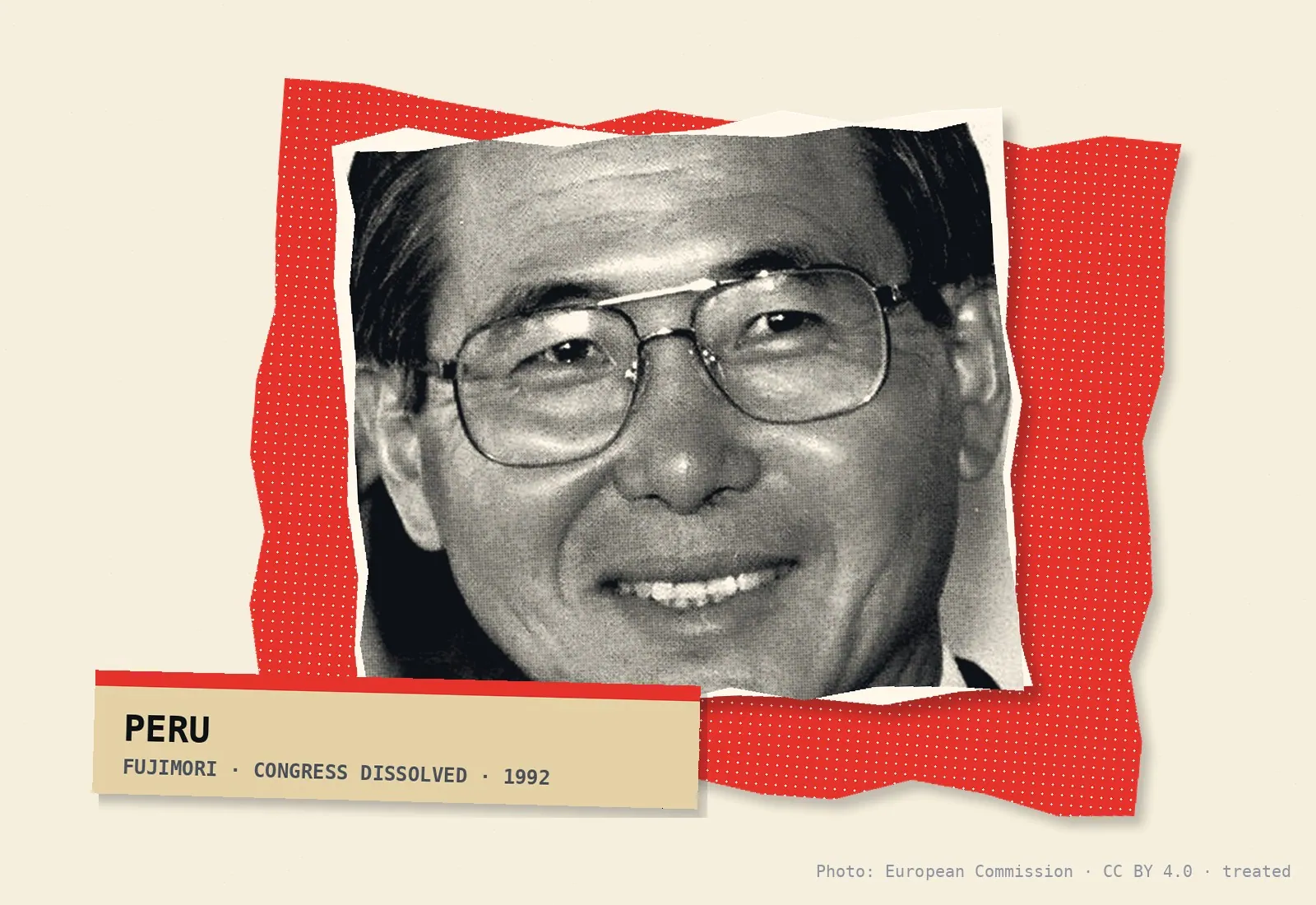
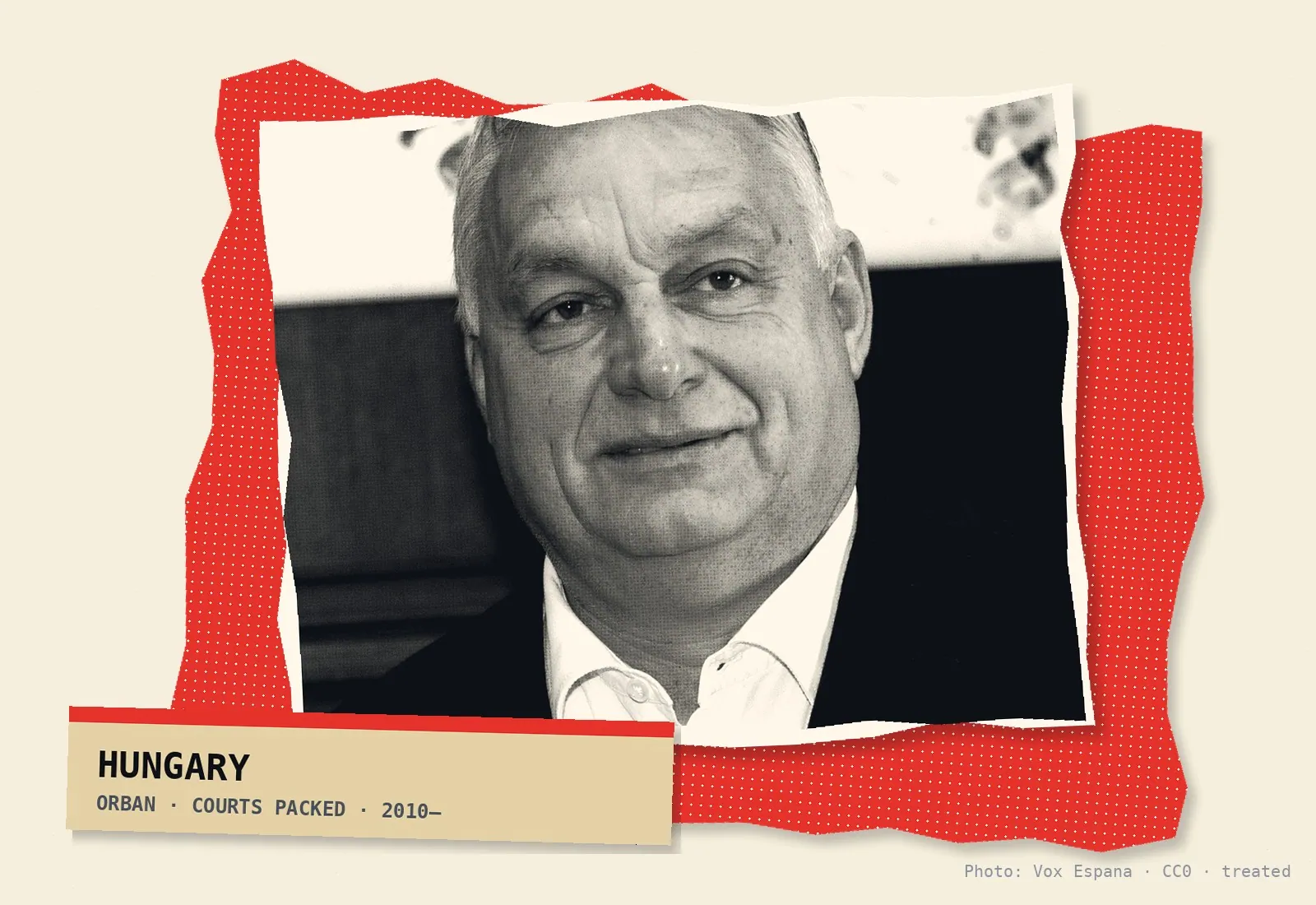
Latin America finally named it. In April 1992 Alberto Fujimori, the elected president of Peru, went on television to announce that he was dissolving Congress, suspending the constitution, and reorganizing the courts. Tanks rolled briefly through Lima, which is why the night is misremembered—but the tanks were theater. The substance was a sitting president using his own government to switch off the parts that constrained him, then holding a referendum to make it stick. The Spanish had a word ready: autogolpe. By our own century the melodrama was gone entirely. Viktor Orbán, back in power in Hungary in 2010, never declared an emergency or dissolved anything; he rewrote the constitution he was elected under, packed the courts, redrew the districts, and let friends buy the press, until Hungary held elections that were free in the sense that ballots were counted and unfair in the sense that everything around the ballot had been bent his way. Erdoğan turned a real coup attempt against him in 2016 into the pretext for purging the judges and officers who might have checked him. None of them needed a tank. They had all learned what Augustus knew.
Strip away the togas and the television, and the same handful of moves appears every time, because they solve the same problem—how to make yourself irremovable while keeping the appearance that you could be removed. Capture the referees: the courts, the auditors, the officials who certify results. Purge the people who can say no—the judges and mid-level clerks whose refusal, in a crisis, is the only thing that stops an unlawful order. Turn the instruments of force inward, at rivals and protesters instead of enemies. Seize a pretext—a fire, a border, a plot—that unlocks powers no one would grant in calm. And keep the forms, so the whole operation can be defended at every step as legal. To this ancient sequence our era has added one genuinely new thing, and it is the only part that is unprecedented. The purges of Sulla and Fujimori were slowed by the manual labor of deciding whom to come for, and that delay was often the only warning anyone got. When a government can fuse its records into a single searchable map of the population—who you are, where you are, whom you fund, what you attend—that delay disappears, and a list of enemies collapses from weeks to hours and from thousands of names to millions. That is the subject of a separate essay here. The script is ancient; the machinery is new; the combination is the danger.
The oldest coup, now running on the newest machine.
How it fails
Here is what the autocrat least wants known: the self-coup is not a reliable machine, and its failures are a manual for resistance. Of the twelve cases in our own atlas, five have ended—one within days, the others after eight to eighteen years in power. In 1993 Guatemala's president, Jorge Serrano, copied Fujimori move for move—dissolved Congress and the Supreme Court, suspended the constitution, and waited for the country to submit. It did not. The Constitutional Court ruled his decree illegal from the bench. The business associations he had counted on condemned him. Crowds filled the streets, the world threatened Guatemala's trade, and the army—asked to enforce the seizure—declined to spend itself on an unpopular man. Within days Serrano was on a plane into exile. The autogolpe that worked in Lima died in Guatemala City, and the law on the books was nearly identical in both. The difference was that enough of the right people, fast enough, refused.
The most vivid proof is recent, and it took only hours. Late one night in December 2024, President Yoon Suk-yeol declared martial law in South Korea and sent troops toward the National Assembly to shut it down. Lawmakers ran to the chamber, some climbing over fences and past soldiers to get inside, and once there they voted—unanimously, across party lines—to lift the decree, as the constitution let them. The soldiers ordered to stop them did not fire; some slowed their steps, unwilling to be the ones who crushed their own parliament on camera. Citizens massed outside through the night. Within about three hours the Assembly had voted the martial law down; within weeks the president was impeached. A self-coup was attempted in a wealthy modern democracy in living memory, and it was undone before dawn.
Lay the reversals side by side and the ingredients are consistent. Speed, because consolidation is a race—every institution captured makes the next one easier, and the only window to stop it is the one before the machine is finished. The refusal of the security forces, because an order to fire on your own citizens is where many soldiers discover a conscience, and an autocoup that cannot count on its guns is a bluff. The defection of elites—the judge who rules against him, the general who stands down—because his power was always a coordination game, a bet that everyone would assume everyone else would comply. And visible, public refusal most of all, not because crowds storm anything but because they break the spell of inevitability the whole thing runs on. Václav Havel, watching a different tyranny from inside it, saw that its real foundation was not force but resignation—the greengrocer who puts the sign in his window because everyone else does. The autocoup burns the same fuel. Its deepest wish is that you will decide it has already won, and disqualify yourself, so it never has to defeat you.
An autocoup that cannot count on its guns is a bluff.
America, now
Which is the uncomfortable business of the present. Lay the recurring preconditions against the United States in 2026 and the fit is close enough that looking away has become the harder position. The country has a leader who returned to power after being criminally prosecuted, after trying once already to overturn an election, and who has said plainly what he means to do next. On our reading, that is a man for whom losing is no longer a demotion. For him, as for Louis-Napoléon, the space between holding office and leaving it is the space between immunity and jeopardy. The ratchet is fully engaged.
The elite that might have stood in the way has largely folded. The president's party has been remade in his image, and the officials who refused him the first time have been named and are being replaced, through the deliberately boring vocabulary of personnel policy, with people chosen to comply. The guardrails that held in 2017 were never marble; they were people who said no and kept their jobs, and a project is under way to make sure those people are not there next time—the subject of another essay here. A decade of insisting that the courts are corrupt, the press the enemy, and the elections rigged has done the third piece of the work, softening the public's attachment to the referees so that gutting them can be sold as reform.
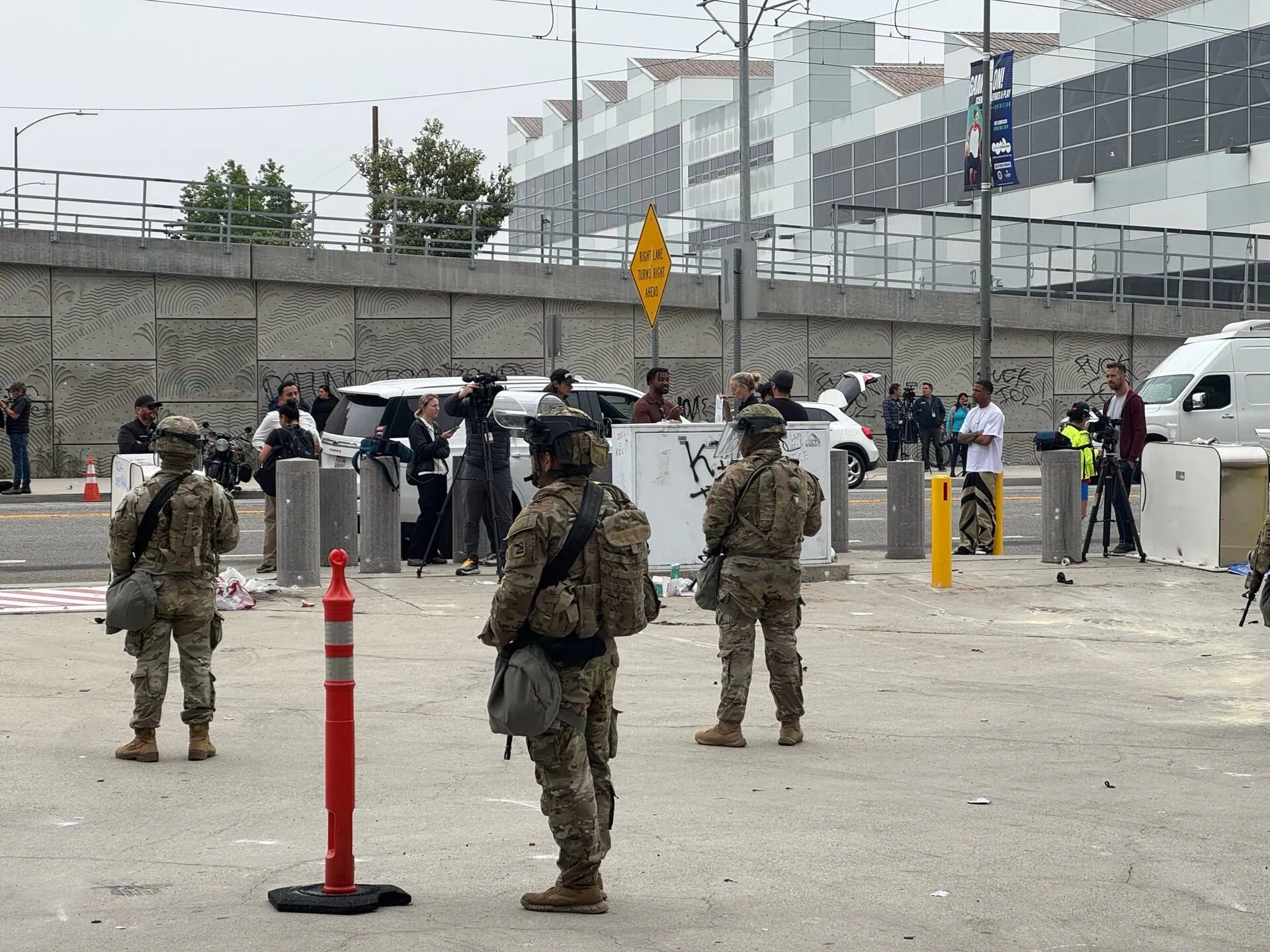
And then the machinery, the part the history did not prepare us for. The moves are already visible—the referees under pressure, the refusers being purged, the troops turning inward, the vocabulary of emergency and extremism assembled, the forms scrupulously kept—but the surveillance capacity now under contract is what makes the American version potentially faster and harder to reverse than Lima or Budapest ever were. The tracker beside this essay exists to hold these pieces in one hand, because one at a time each is easy to wave away, and only together do they make a shape—and the shape is one this history has taught us to read.
None of this means the autocoup has succeeded; saying so would be its own dishonesty. It means the conditions are met, the tools are built, and the man in charge has told us what they are for. But the history of this maneuver is not a history of inevitability. It is a history of a specific gamble that sometimes pays and sometimes collapses, and what decides which is never fate but response—its speed, the courage of the officials and soldiers and judges who refuse, the presence of a public that will not pretend this is normal. Guatemala and Seoul belong to the record as surely as Rome and Lima. The attempt on America is no longer hypothetical: the conditions are met, and the record of the moves is on this site. What twenty-five centuries insist is that coming is not the same as succeeding—and that the difference has always been decided by the people who were told it was already too late, and refused to believe it.
See where today's news sits on the map.
Every move in this essay is a tracked case file with its own receipts.
Open Tracker →