Am I Being Alarmist?
The strongest argument against everything this publication says, made as honestly as we can—and the narrower, harder claim that survives it.
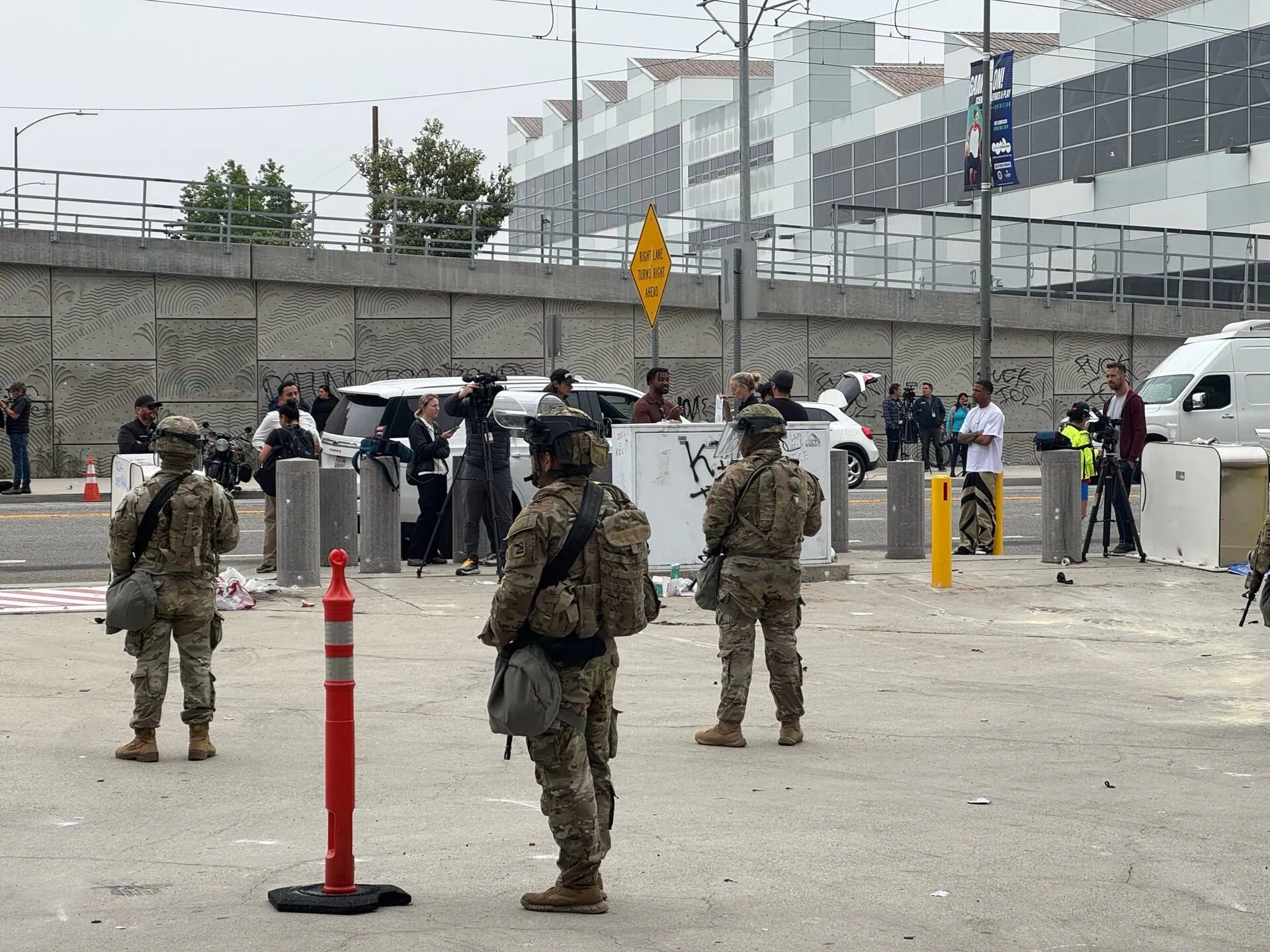
There is a failure mode for people who write about democratic decline, and it is worth naming before it happens to us. You start seeing the end of the republic in every news cycle. Every firing is a purge, every executive order is a coup, every election is the last one. The alarm never stops ringing, and because it never stops, people stop hearing it—and then, if a real emergency comes, the word you needed has been worn out in advance. Crying wolf is not a harmless error. It is a way of disarming yourself.
So we owe you, and ourselves, the strongest version of the case that we are wrong.
The best case that we're wrong
It goes like this. American institutions are old, deep, and genuinely resilient, and they have already been tested by this exact man and passed. In his first term, Donald Trump tried a great many of the things we now warn about, and the system held. Courts ruled against him, hundreds of times, and he mostly complied. Officials refused his orders. States went their own way. The military declined to be dragged into politics. And in the end, having lost an election and tried to overturn it, he left office anyway. The machinery of American democracy absorbed the heaviest blow it had taken in a century and kept working.
The skeptic goes further. The American state is not some sleek authoritarian instrument; it is a sprawling, incompetent, leaky thing that cannot build a website on time, let alone a flawless surveillance dictatorship. The same government you are describing as an omniscient machine routinely loses its own laptops. The contracts you cite are half-implemented, the AI systems are error-prone, and "authorized to query five databases" is a long way from "a functioning tool of mass repression."
In addition, federalism means most elections are run by states and counties the president does not control. The press is free and loud. The opposition party exists, wins elections, and is not in prison. And Americans have heard "this is the end of democracy" every two years for a decade now, from people who turned out to be selling books. At some point the boy who cries wolf has a credibility problem, and it is fair to ask whether this publication is the boy.
That is the case.
Where the skeptic is right
It is right that the first term is real evidence, and that the guardrails held then. It is right that American institutions are stronger and more decentralized than Hungary’s or Peru’s. And it's right that state incompetence is a real constraint. A government this clumsy will botch some of what it attempts, and botched repression is less total than the clean kind. There is also a danger of alarmism. A publication that treats every outrage as the final one is worse than useless, because it burns the very word people will need if the worst actually comes. We take that risk seriously.
Why it fails this time
But the central claim—that because the guardrails held last time, they will hold again—misunderstands what the guardrails were.
The guardrails in the first term were not eternal institutions, permanently preserved in marble; the guardrails were people. The guardrails were the officials who refused and the appointees who slow-walked and the lawyers who resigned rather than sign and the generals who would not play along.
In Trump's first term, "the system" held because, at dozens of critical moments, an individual human being said no. The single most important fact about Trump's current administration is that those critical moments were studied and, methodically, the administration planned to make sure they cannot happen again. That is what Schedule F is. That is what the loyalty screening on new hires is. The refusers were never a permanent feature of the state; they were a workforce, and the administration is deliberately stripping that workforce of its protection to refuse—and screening new hires for enthusiasm about the president's agenda. You cannot count on the guardrails that held last time when the guardrails have been identified by name and removed.
The incompetence argument cuts less deeply than it comforts. Autocoups do not require competence at governing; they require competence at a much narrower task—identifying enemies and acting on them. A government that cannot build a website can still buy one from Palantir. And repression does not have to be flawless to work. It does not have to catch everyone. It only has to catch enough people, visibly enough, that the rest decide not to risk it. A leaky, error-prone surveillance state is still a surveillance state; the errors just fall on innocent people, which does not reassure the innocent.
As for federalism and the free press and the opposition that is not yet in prison—these are real, and they are exactly why this is a fight and not a foregone conclusion. But "it has not happened yet" is a description of the present, not a guarantee about the future, and every case in our comparative essay featured a free press and an intact opposition right up until it didn't. The question is not whether America is Hungary today. It plainly is not. The question is whether the machinery now being assembled makes becoming Hungary more possible than it was, and the honest answer is that it obviously does.
The bottom line
We are not telling you that the autocoup has already succeeded, or that it is inevitable and certain. We do not know that, and anyone who claims to know the future is doing the thing we just warned against.
What we are telling you is narrower and, we think, undeniable: the specific human and institutional guardrails that saved the country last time are being dismantled on purpose; the technical capacity for mass targeting that did not exist last time now does; and the man in charge has said, on video, that with one more bill (the SAVE America Act) his side “will not lose an election for a hundred years.”
You do not have to believe the worst is inevitable to believe that the worst has been made far more possible; the difference between possible and actual now rests on things — an election, a few courts, a few thousand officials who still have their jobs — that are themselves under direct attack.
That is not alarmism. Alarmism is fear in excess of the evidence. This is fear that is finally catching up to it.
See where today's news sits on the map.
Every move in this essay is a tracked case file with its own receipts.
Open Tracker →